Repository navigation
Expand file tree
/
Copy pathsam_net_implementation.py
More file actions
860 lines (629 loc) · 27.2 KB
/
Copy pathsam_net_implementation.py
File metadata and controls
860 lines (629 loc) · 27.2 KB
1
2
3
4
5
6
7
8
9
10
11
12
13
14
15
16
17
18
19
20
21
22
23
24
25
26
27
28
29
30
31
32
33
34
35
36
37
38
39
40
41
42
43
44
45
46
47
48
49
50
51
52
53
54
55
56
57
58
59
60
61
62
63
64
65
66
67
68
69
70
71
72
73
74
75
76
77
78
79
80
81
82
83
84
85
86
87
88
89
90
91
92
93
94
95
96
97
98
99
100
101
102
103
104
105
106
107
108
109
110
111
112
113
114
115
116
117
118
119
120
121
122
123
124
125
126
127
128
129
130
131
132
133
134
135
136
137
138
139
140
141
142
143
144
145
146
147
148
149
150
151
152
153
154
155
156
157
158
159
160
161
162
163
164
165
166
167
168
169
170
171
172
173
174
175
176
177
178
179
180
181
182
183
184
185
186
187
188
189
190
191
192
193
194
195
196
197
198
199
200
201
202
203
204
205
206
207
208
209
210
211
212
213
214
215
216
217
218
219
220
221
222
223
224
225
226
227
228
229
230
231
232
233
234
235
236
237
238
239
240
241
242
243
244
245
246
247
248
249
250
251
252
253
254
255
256
257
258
259
260
261
262
263
264
265
266
267
268
269
270
271
272
273
274
275
276
277
278
279
280
281
282
283
284
285
286
287
288
289
290
291
292
293
294
295
296
297
298
299
300
301
302
303
304
305
306
307
308
309
310
311
312
313
314
315
316
317
318
319
320
321
322
323
324
325
326
327
328
329
330
331
332
333
334
335
336
337
338
339
340
341
342
343
344
345
346
347
348
349
350
351
352
353
354
355
356
357
358
359
360
361
362
363
364
365
366
367
368
369
370
371
372
373
374
375
376
377
378
379
380
381
382
383
384
385
386
387
388
389
390
391
392
393
394
395
396
397
398
399
400
401
402
403
404
405
406
407
408
409
410
411
412
413
414
415
416
417
418
419
420
421
422
423
424
425
426
427
428
429
430
431
432
433
434
435
436
437
438
439
440
441
442
443
444
445
446
447
448
449
450
451
452
453
454
455
456
457
458
459
460
461
462
463
464
465
466
467
468
469
470
471
472
473
474
475
476
477
478
479
480
481
482
483
484
485
486
487
488
489
490
491
492
493
494
495
496
497
498
499
500
501
502
503
504
505
506
507
508
509
510
511
512
513
514
515
516
517
518
519
520
521
522
523
524
525
526
527
528
529
530
531
532
533
534
535
536
537
538
539
540
541
542
543
544
545
546
547
548
549
550
551
552
553
554
555
556
557
558
559
560
561
562
563
564
565
566
567
568
569
570
571
572
573
574
575
576
577
578
579
580
581
582
583
584
585
586
587
588
589
590
591
592
593
594
595
596
597
598
599
600
601
602
603
604
605
606
607
608
609
610
611
612
613
614
615
616
617
618
619
620
621
622
623
624
625
626
627
628
629
630
631
632
633
634
635
636
637
638
639
640
641
642
643
644
645
646
647
648
649
650
651
652
653
654
655
656
657
658
659
660
661
662
663
664
665
666
667
668
669
670
671
672
673
674
675
676
677
678
679
680
681
682
683
684
685
686
687
688
689
690
691
692
693
694
695
696
697
698
699
700
701
702
703
704
705
706
707
708
709
710
711
712
713
714
715
716
717
718
719
720
721
722
723
724
725
726
727
728
729
730
731
732
733
734
735
736
737
738
739
740
741
742
743
744
745
746
747
748
749
750
751
752
753
754
755
756
757
758
759
760
761
762
763
764
765
766
767
768
769
770
771
772
773
774
775
776
777
778
779
780
781
782
783
784
785
786
787
788
789
790
791
792
793
794
795
796
797
798
799
800
801
802
803
804
805
806
807
808
809
810
811
812
813
814
815
816
817
818
819
820
821
822
823
824
825
826
827
828
829
830
831
832
833
834
835
836
837
838
839
840
841
842
843
844
845
846
847
848
849
850
851
852
853
854
855
856
#!/usr/bin/env python
# coding: utf-8
# In[1]:
# Basic utilities
import os
import shutil
import glob
import numpy as np
import pandas as pd
import matplotlib.pyplot as plt
import seaborn as sns
from PIL import Image, ImageOps
import cv2
# Skimage utilities
from skimage import data
from skimage.util import montage
from skimage.transform import rotate, resize
# Neural imaging
import nibabel as nib
import nilearn as nl
import nilearn.plotting as nlplt
# get_ipython().system('pip install git+https://github.com/miykael/gif_your_nifti # nifti to gif')
import os
os.system("pip install git+https://github.com/miykael/gif_your_nifti")
import gif_your_nifti.core as gif2nif # Nifti to GIF converter
# Machine learning libraries
import tensorflow as tf
from tensorflow import keras
from tensorflow.keras.layers import Input
from tensorflow.keras import backend as K, models, layers, optimizers
from tensorflow.keras.models import Model
from tensorflow.keras.layers import (Input, Conv2D, MaxPooling2D, Dropout, UpSampling2D, concatenate)
from tensorflow.keras.callbacks import (ModelCheckpoint, ReduceLROnPlateau, EarlyStopping, TensorBoard, CSVLogger)
from tensorflow.keras.utils import plot_model
from sklearn.model_selection import train_test_split
from sklearn.preprocessing import MinMaxScaler
from sklearn.metrics import classification_report
# Settings
np.set_printoptions(precision=3, suppress=True)
# Segmentation class mapping
SEGMENT_CLASSES = {
0: 'NOT tumor',
1: 'NECROTIC/CORE', # or NON-ENHANCING tumor CORE
2: 'EDEMA',
3: 'ENHANCING' # original label 4 remapped to 3
}
# Volume settings
VOLUME_SLICES = 100
VOLUME_START_AT = 22
IMG_SIZE=128
# In[2]:
# Dataset paths
TRAIN_PATH = 'data/BRATS/BraTS2020_TrainingData/MICCAI_BraTS2020_TrainingData/'
VALID_PATH = 'data/BRATS/BraTS2020_ValidationData/MICCAI_BraTS2020_ValidationData/'
# Load sample images and mask
patient_id = 'BraTS20_Training_001'
modalities = ['flair', 't1', 't1ce', 't2', 'seg']
images = {mod: nib.load(f"{TRAIN_PATH}{patient_id}/{patient_id}_{mod}.nii").get_fdata() for mod in modalities}
# Visualize the center slices
fig, axes = plt.subplots(1, 5, figsize=(20, 10))
slice_idx = images['flair'].shape[0] // 2 - 25
titles = ['FLAIR', 'T1', 'T1CE', 'T2', 'Mask']
for ax, mod, title in zip(axes, modalities, titles):
ax.imshow(images[mod][:, :, slice_idx], cmap='gray' if mod != 'seg' else None)
ax.set_title(f"Image {title}")
ax.axis('off')
plt.tight_layout()
plt.show()
# # Create model || U-Net: Convolutional Networks for Biomedical Image Segmentation
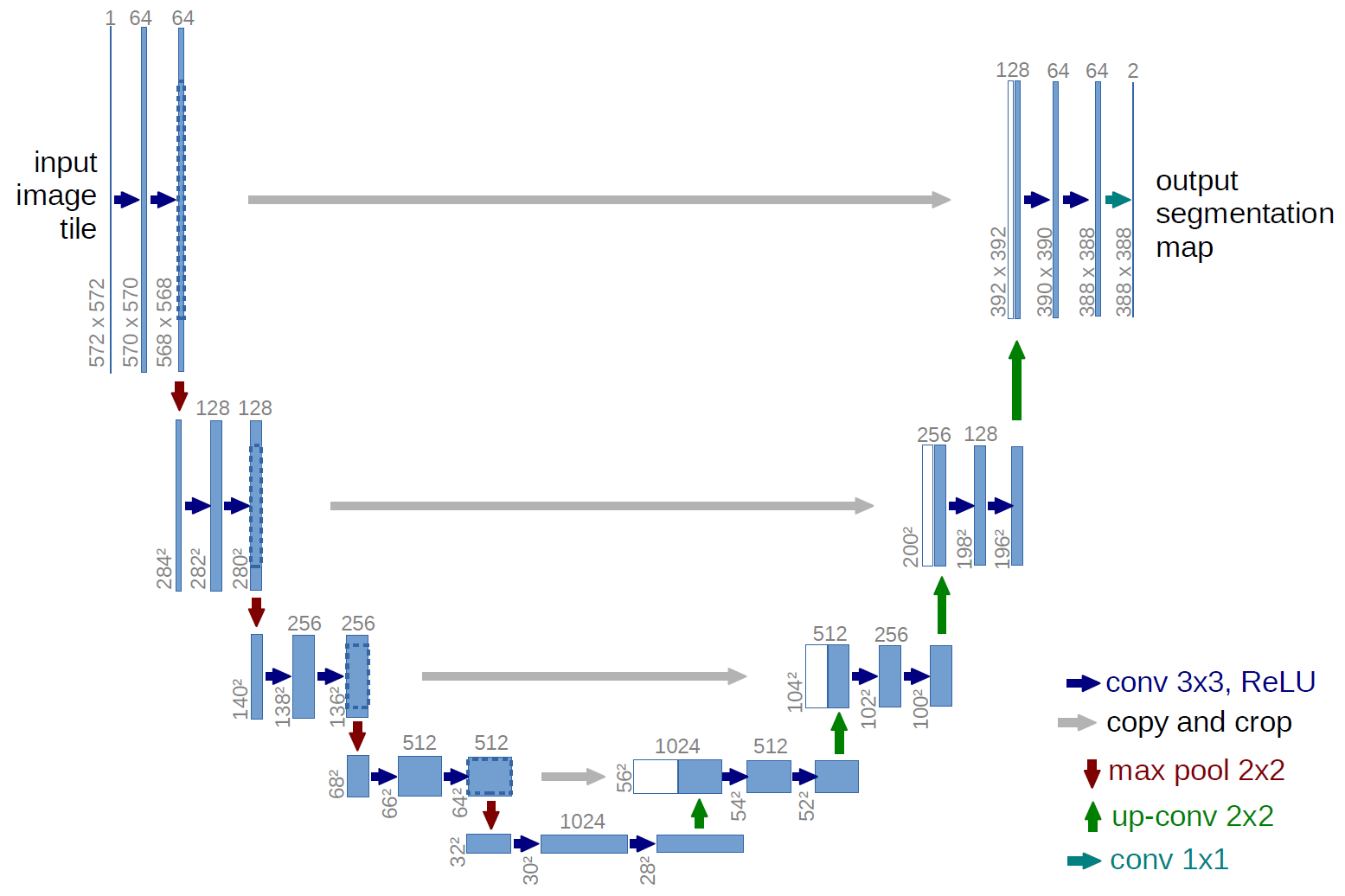
# he u-net is convolutional network architecture for fast and precise segmentation of images. Up to now it has outperformed the prior best method (a sliding-window convolutional network) on the ISBI challenge for segmentation of neuronal structures in electron microscopic stacks. It has won the Grand Challenge for Computer-Automated Detection of Caries in Bitewing Radiography at ISBI 2015, and it has won the Cell Tracking Challenge at ISBI 2015 on the two most challenging transmitted light microscopy categories (Phase contrast and DIC microscopy) by a large margin
# [more on](https://lmb.informatik.uni-freiburg.de/people/ronneber/u-net/)
# 
#
# # Loss function
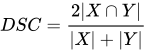
# **Dice coefficient**
# , which is essentially a measure of overlap between two samples. This measure ranges from 0 to 1 where a Dice coefficient of 1 denotes perfect and complete overlap. The Dice coefficient was originally developed for binary data, and can be calculated as:
#
# 
#
# **As matrices**
# 
#
# [Implementation, (images above) and explanation can be found here](https://www.jeremyjordan.me/semantic-segmentation/)
# In[3]:
# # Dice Coefficient for multi-class (4 classes)
# def dice_coef(y_true, y_pred, smooth=1.0, class_num=4):
# total_loss = 0
# for i in range(class_num):
# y_true_f = K.flatten(y_true[:, :, :, i])
# y_pred_f = K.flatten(y_pred[:, :, :, i])
# intersection = K.sum(y_true_f * y_pred_f)
# dice = (2. * intersection + smooth) / (K.sum(y_true_f) + K.sum(y_pred_f) + smooth)
# total_loss += dice
# return total_loss / class_num
# Per-Class Dice Coefficient
def dice_coef_class(y_true, y_pred, class_idx, epsilon=1e-6):
intersection = K.sum(K.abs(y_true[:, :, :, class_idx] * y_pred[:, :, :, class_idx]))
denom = K.sum(K.square(y_true[:, :, :, class_idx])) + K.sum(K.square(y_pred[:, :, :, class_idx])) + epsilon
return (2. * intersection) / denom
# def dice_coef_necrotic(y_true, y_pred):
# return dice_coef_class(y_true, y_pred, class_idx=1)
# def dice_coef_edema(y_true, y_pred):
# return dice_coef_class(y_true, y_pred, class_idx=2)
# def dice_coef_enhancing(y_true, y_pred):
# return dice_coef_class(y_true, y_pred, class_idx=3)
# # Precision
# def precision(y_true, y_pred):
# tp = K.sum(K.round(K.clip(y_true * y_pred, 0, 1)))
# pp = K.sum(K.round(K.clip(y_pred, 0, 1)))
# return tp / (pp + K.epsilon())
# # Sensitivity (Recall)
# def sensitivity(y_true, y_pred):
# tp = K.sum(K.round(K.clip(y_true * y_pred, 0, 1)))
# possible_positives = K.sum(K.round(K.clip(y_true, 0, 1)))
# return tp / (possible_positives + K.epsilon())
# # Specificity
# def specificity(y_true, y_pred):
# tn = K.sum(K.round(K.clip((1 - y_true) * (1 - y_pred), 0, 1)))
# possible_negatives = K.sum(K.round(K.clip(1 - y_true, 0, 1)))
# return tn / (possible_negatives + K.epsilon())
@tf.function
def dice_coef_necrotic(y_true, y_pred):
return dice_coef_class(y_true, y_pred, class_idx=1)
@tf.function
def dice_coef_edema(y_true, y_pred):
return dice_coef_class(y_true, y_pred, class_idx=2)
@tf.function
def dice_coef_enhancing(y_true, y_pred):
return dice_coef_class(y_true, y_pred, class_idx=3)
@tf.function
def dice_coef(y_true, y_pred, smooth=1.0):
class_num = 4
total_loss = 0
for i in range(class_num):
y_true_f = K.flatten(y_true[:, :, :, i])
y_pred_f = K.flatten(y_pred[:, :, :, i])
intersection = K.sum(y_true_f * y_pred_f)
dice = (2. * intersection + smooth) / (K.sum(y_true_f) + K.sum(y_pred_f) + smooth)
total_loss += dice
return total_loss / class_num
@tf.function
def precision(y_true, y_pred):
tp = K.sum(K.round(K.clip(y_true * y_pred, 0, 1)))
pp = K.sum(K.round(K.clip(y_pred, 0, 1)))
return tp / (pp + K.epsilon())
@tf.function
def sensitivity(y_true, y_pred):
tp = K.sum(K.round(K.clip(y_true * y_pred, 0, 1)))
possible_positives = K.sum(K.round(K.clip(y_true, 0, 1)))
return tp / (possible_positives + K.epsilon())
@tf.function
def specificity(y_true, y_pred):
tn = K.sum(K.round(K.clip((1 - y_true) * (1 - y_pred), 0, 1)))
possible_negatives = K.sum(K.round(K.clip(1 - y_true, 0, 1)))
return tn / (possible_negatives + K.epsilon())
# In[4]:
# Source: https://naomi-fridman.medium.com/multi-class-image-segmentation-a5cc671e647a
def conv_block(x, filters, kernel_init, dropout_rate=None):
x = Conv2D(filters, 3, activation='relu', padding='same', kernel_initializer=kernel_init)(x)
x = Conv2D(filters, 3, activation='relu', padding='same', kernel_initializer=kernel_init)(x)
if dropout_rate:
x = Dropout(dropout_rate)(x)
return x
def build_unet(input_layer, kernel_init='he_normal', dropout_rate=0.2):
# Encoder
c1 = conv_block(input_layer, 32, kernel_init)
p1 = MaxPooling2D((2, 2))(c1)
c2 = conv_block(p1, 64, kernel_init)
p2 = MaxPooling2D((2, 2))(c2)
c3 = conv_block(p2, 128, kernel_init)
p3 = MaxPooling2D((2, 2))(c3)
c4 = conv_block(p3, 256, kernel_init)
p4 = MaxPooling2D((2, 2))(c4)
# Bottleneck
c5 = conv_block(p4, 512, kernel_init, dropout_rate)
# Decoder
u6 = UpSampling2D((2, 2))(c5)
u6 = Conv2D(256, 2, activation='relu', padding='same', kernel_initializer=kernel_init)(u6)
u6 = concatenate([c4, u6])
c6 = conv_block(u6, 256, kernel_init)
u7 = UpSampling2D((2, 2))(c6)
u7 = Conv2D(128, 2, activation='relu', padding='same', kernel_initializer=kernel_init)(u7)
u7 = concatenate([c3, u7])
c7 = conv_block(u7, 128, kernel_init)
u8 = UpSampling2D((2, 2))(c7)
u8 = Conv2D(64, 2, activation='relu', padding='same', kernel_initializer=kernel_init)(u8)
u8 = concatenate([c2, u8])
c8 = conv_block(u8, 64, kernel_init)
u9 = UpSampling2D((2, 2))(c8)
u9 = Conv2D(32, 2, activation='relu', padding='same', kernel_initializer=kernel_init)(u9)
u9 = concatenate([c1, u9])
c9 = conv_block(u9, 32, kernel_init)
outputs = Conv2D(4, (1, 1), activation='softmax')(c9)
return Model(inputs=input_layer, outputs=outputs)
# Instantiate and compile the model
input_layer = Input((IMG_SIZE, IMG_SIZE, 2))
model = build_unet(input_layer, kernel_init='he_normal', dropout_rate=0.2)
model.compile(
loss="categorical_crossentropy",
optimizer=keras.optimizers.Adam(learning_rate=0.001),
metrics=[
'accuracy',
tf.keras.metrics.MeanIoU(num_classes=4),
dice_coef,
precision,
sensitivity,
specificity,
dice_coef_necrotic,
dice_coef_edema,
dice_coef_enhancing
]
)
# In[5]:
# # Visualize the model architecture
# plot_model(
# model,
# show_shapes=True,
# show_layer_names=True,
# rankdir='TB',
# dpi=70
# )
# In[6]:
# List all training/validation directories
train_val_dirs = [f.path for f in os.scandir(TRAIN_PATH) if f.is_dir()]
# Remove bad case
BAD_CASE = 'BraTS20_Training_355'
train_val_dirs = [d for d in train_val_dirs if not d.endswith(BAD_CASE)]
# Extract patient IDs from paths
def extract_ids(paths):
return [os.path.basename(p) for p in paths]
train_val_ids = extract_ids(train_val_dirs)
# Train/Validation/Test split
train_test_ids, val_ids = train_test_split(train_val_ids, test_size=0.2, random_state=42)
train_ids, test_ids = train_test_split(train_test_ids, test_size=0.15, random_state=42)
# **Override Keras sequence DataGenerator class**
# In[7]:
class DataGenerator(keras.utils.Sequence):
"""Generates data for Keras."""
def __init__(self, list_IDs, dim=(IMG_SIZE, IMG_SIZE), batch_size=1, n_channels=2, shuffle=True):
self.dim = dim
self.batch_size = batch_size
self.list_IDs = list_IDs
self.n_channels = n_channels
self.shuffle = shuffle
self.on_epoch_end()
def __len__(self):
"""Denotes the number of batches per epoch."""
return int(np.floor(len(self.list_IDs) / self.batch_size))
def __getitem__(self, index):
"""Generate one batch of data."""
indexes = self.indexes[index * self.batch_size:(index + 1) * self.batch_size]
batch_ids = [self.list_IDs[k] for k in indexes]
X, Y = self.__data_generation(batch_ids)
return X, Y
def on_epoch_end(self):
"""Updates indexes after each epoch."""
self.indexes = np.arange(len(self.list_IDs))
if self.shuffle:
np.random.shuffle(self.indexes)
def __data_generation(self, batch_ids):
"""Generates data containing batch_size samples."""
X = np.zeros((self.batch_size * VOLUME_SLICES, *self.dim, self.n_channels), dtype=np.float32)
y = np.zeros((self.batch_size * VOLUME_SLICES, 240, 240), dtype=np.uint8)
for idx, patient_id in enumerate(batch_ids):
case_path = os.path.join(TRAIN_PATH, patient_id)
flair = nib.load(os.path.join(case_path, f'{patient_id}_flair.nii')).get_fdata()
ce = nib.load(os.path.join(case_path, f'{patient_id}_t1ce.nii')).get_fdata()
seg = nib.load(os.path.join(case_path, f'{patient_id}_seg.nii')).get_fdata()
for slice_idx in range(VOLUME_SLICES):
slice_num = slice_idx + VOLUME_START_AT
X[slice_idx + VOLUME_SLICES * idx, :, :, 0] = cv2.resize(flair[:, :, slice_num], self.dim)
X[slice_idx + VOLUME_SLICES * idx, :, :, 1] = cv2.resize(ce[:, :, slice_num], self.dim)
y[slice_idx + VOLUME_SLICES * idx] = seg[:, :, slice_num]
# Preprocess masks
y[y == 4] = 3 # Convert label 4 to 3
Y = tf.one_hot(y, depth=4)
Y = tf.image.resize(Y, self.dim)
# Normalize inputs
X /= np.max(X)
return X, Y
# Instantiate the generators
training_generator = DataGenerator(train_ids)
valid_generator = DataGenerator(val_ids)
test_generator = DataGenerator(test_ids)
# **Number of data used**
# for training / testing / validation
# In[8]:
# Callback: CSV Logger
csv_logger = CSVLogger('training.log', separator=',', append=False)
# Callback: Reduce LR on Plateau
reduce_lr = ReduceLROnPlateau(
monitor='val_loss',
factor=0.2,
patience=2,
min_lr=1e-6,
verbose=1
)
# Callback: Model Checkpoint (optional, recommended)
checkpoint = ModelCheckpoint(
filepath='data/UNET/model_per_class.weights.h5',
monitor='val_loss',
save_best_only=True,
save_weights_only=True,
verbose=1
)
# Combine callbacks
callbacks = [reduce_lr, csv_logger, checkpoint]
# In[9]:
# Clear any previous Keras session
K.clear_session()
# Train the model
history = model.fit(
training_generator,
validation_data=valid_generator,
epochs=1, # You can set to 35 when needed
steps_per_epoch=len(train_ids),
callbacks=callbacks,
verbose=1
)
# Save the final model
model.save("/kaggle/working/3D_MRI_Brain_Tumor_Segmentation.h5")
# **Visualize the training process**
# In[10]:
import tensorflow as tf
import numpy as np
import nibabel as nib
import cv2
# Load the trained model with custom metrics
model = tf.keras.models.load_model(
# "/kaggle/working/3D_MRI_Brain_Tumor_Segmentation.h5",
# "/kaggle/input/model-x80-dcs65/model_x81_dcs65.h5",
"data/UNET/model_per_class.h5",
custom_objects={
'dice_coef': dice_coef,
'precision': precision,
'sensitivity': sensitivity,
'specificity': specificity,
'dice_coef_necrotic': dice_coef_necrotic,
'dice_coef_edema': dice_coef_edema,
'dice_coef_enhancing': dice_coef_enhancing
}
)
def preprocess_image(image_path, slice_index):
"""Load, resize, and normalize a single slice from a NIfTI file."""
img = nib.load(image_path).get_fdata()
img_slice = img[:, :, slice_index]
img_resized = cv2.resize(img_slice, (IMG_SIZE, IMG_SIZE))
img_resized = img_resized / np.max(img_resized)
return img_resized
def predict_segmentation(flair_path, t1ce_path, slice_index):
"""Prepare input from FLAIR and T1CE images and predict segmentation."""
X = np.zeros((1, IMG_SIZE, IMG_SIZE, 2), dtype=np.float32)
X[0, :, :, 0] = preprocess_image(flair_path, slice_index)
X[0, :, :, 1] = preprocess_image(t1ce_path, slice_index)
prediction = model.predict(X)
predicted_mask = np.argmax(prediction[0], axis=-1)
return predicted_mask
# Example usage
# flair_path = '/kaggle/input/brats20-dataset-training-validation/BraTS2020_ValidationData/MICCAI_BraTS2020_ValidationData/BraTS20_Validation_010/BraTS20_Validation_010_flair.nii'
# t1ce_path = '/kaggle/input/brats20-dataset-training-validation/BraTS2020_ValidationData/MICCAI_BraTS2020_ValidationData/BraTS20_Validation_010/BraTS20_Validation_010_t1ce.nii'
flair_path = 'data/BRATS/BraTS2020_ValidationData/MICCAI_BraTS2020_ValidationData/BraTS20_Validation_010/BraTS20_Validation_010_flair.nii'
t1ce_path = 'data/BRATS/BraTS2020_ValidationData/MICCAI_BraTS2020_ValidationData/BraTS20_Validation_010/BraTS20_Validation_010_t1ce.nii'
slice_idx = 75
predicted_mask = predict_segmentation(flair_path, t1ce_path, slice_idx)
# Directly visualize the predicted mask
# visualize_prediction(predicted_mask)
# In[11]:
import os
import numpy as np
import nibabel as nib
import cv2
from tqdm import tqdm # progress bar
# Settings
IMG_SIZE = 128
VOLUME_SLICES = 100
VOLUME_START_AT = 22
def preprocess_volume(flair_path, t1ce_path):
"""Load, resize, and normalize an entire 3D volume for a patient."""
flair = nib.load(flair_path).get_fdata()
t1ce = nib.load(t1ce_path).get_fdata()
volume = np.zeros((VOLUME_SLICES, IMG_SIZE, IMG_SIZE, 2), dtype=np.float32)
for i in range(VOLUME_SLICES):
slice_idx = VOLUME_START_AT + i
volume[i, :, :, 0] = cv2.resize(flair[:, :, slice_idx], (IMG_SIZE, IMG_SIZE)) / np.max(flair)
volume[i, :, :, 1] = cv2.resize(t1ce[:, :, slice_idx], (IMG_SIZE, IMG_SIZE)) / np.max(t1ce)
return volume
def predict_volume(model, flair_path, t1ce_path):
"""Predict the full volume slice-by-slice."""
X_volume = preprocess_volume(flair_path, t1ce_path) # shape (100, 128, 128, 2)
predicted_volume = np.zeros((VOLUME_SLICES, IMG_SIZE, IMG_SIZE), dtype=np.uint8)
for i in range(VOLUME_SLICES):
X_slice = np.expand_dims(X_volume[i], axis=0) # shape (1, 128, 128, 2)
prediction = model.predict(X_slice, verbose=0)
predicted_mask = np.argmax(prediction[0], axis=-1)
predicted_volume[i] = predicted_mask
return predicted_volume
def process_validation_or_test_set(model, patient_ids, base_path):
"""Predict segmentations for a list of patients."""
all_predictions = {}
for pid in tqdm(patient_ids, desc='Predicting Patients'):
flair_path = os.path.join(base_path, pid, f'{pid}_flair.nii')
t1ce_path = os.path.join(base_path, pid, f'{pid}_t1ce.nii')
predicted_volume = predict_volume(model, flair_path, t1ce_path)
all_predictions[pid] = predicted_volume
return all_predictions
# In[12]:
# Paths
# VALIDATION_DATASET_PATH = '/kaggle/input/brats20-dataset-training-validation/BraTS2020_ValidationData/MICCAI_BraTS2020_ValidationData/'
# TRAIN_DATASET_PATH = '/kaggle/input/brats20-dataset-training-validation/BraTS2020_TrainingData/MICCAI_BraTS2020_TrainingData/'
VALIDATION_DATASET_PATH = "data/BRATS/BraTS2020_ValidationData/MICCAI_BraTS2020_ValidationData/"
TRAIN_DATASET_PATH = "data/BRATS/BraTS2020_TrainingData/MICCAI_BraTS2020_TrainingData/"
# Example: Validation patients
# List only folders (patients) — ignore CSV or other files
validation_patient_ids = [d for d in os.listdir(VALIDATION_DATASET_PATH)
if os.path.isdir(os.path.join(VALIDATION_DATASET_PATH, d))]
# Example: Testing patients (if you split already)
# testing_patient_ids = your_test_split_ids_list
# Predict Validation Set
validation_predictions = process_validation_or_test_set(model, validation_patient_ids, VALIDATION_DATASET_PATH)
# Predict Test Set (if you have)
# test_predictions = process_validation_or_test_set(model, testing_patient_ids, TRAIN_DATASET_PATH)
# #SAM#
# In[13]:
import os
import numpy as np
import nibabel as nib
import cv2
from tqdm import tqdm
# Settings
IMG_SIZE = 128
VOLUME_SLICES = 100
VOLUME_START_AT = 22
OUTPUT_MASKS_FOLDER = '/kaggle/working/pseudo_labels/' # Path where you save predicted masks
model = tf.keras.models.load_model(
# '/kaggle/input/model-x80-dcs65/model_x81_dcs65.h5',
'data/UNET/model_per_class.h5',
custom_objects={
'dice_coef': dice_coef,
'precision': precision,
'sensitivity': sensitivity,
'specificity': specificity,
'dice_coef_necrotic': dice_coef_necrotic,
'dice_coef_edema': dice_coef_edema,
'dice_coef_enhancing': dice_coef_enhancing
}
)
os.makedirs(OUTPUT_MASKS_FOLDER, exist_ok=True)
def preprocess_volume(flair_path, t1ce_path):
flair = nib.load(flair_path).get_fdata()
t1ce = nib.load(t1ce_path).get_fdata()
volume = np.zeros((VOLUME_SLICES, IMG_SIZE, IMG_SIZE, 2), dtype=np.float32)
for i in range(VOLUME_SLICES):
slice_idx = VOLUME_START_AT + i
volume[i, :, :, 0] = cv2.resize(flair[:, :, slice_idx], (IMG_SIZE, IMG_SIZE)) / np.max(flair)
volume[i, :, :, 1] = cv2.resize(t1ce[:, :, slice_idx], (IMG_SIZE, IMG_SIZE)) / np.max(t1ce)
return volume
# New OUTPUT FOLDER
OUTPUT_DATASET_FOLDER = '/kaggle/working/dataset/' # Not pseudo_labels/
os.makedirs(os.path.join(OUTPUT_DATASET_FOLDER, "images"), exist_ok=True)
os.makedirs(os.path.join(OUTPUT_DATASET_FOLDER, "masks"), exist_ok=True)
def predict_and_save_pseudolabels(model, patient_ids, base_path):
for pid in tqdm(patient_ids, desc='Generating pseudo-labels'):
flair_path = os.path.join(base_path, pid, f'{pid}_flair.nii')
t1ce_path = os.path.join(base_path, pid, f'{pid}_t1ce.nii')
X_volume = preprocess_volume(flair_path, t1ce_path)
for i in range(VOLUME_SLICES):
X_slice = np.expand_dims(X_volume[i], axis=0) # (1, 128, 128, 2)
prediction = model.predict(X_slice, verbose=0)
predicted_mask = np.argmax(prediction[0], axis=-1) # (128,128)
# Save input images (choose one channel, e.g., FLAIR)
image_save_path = os.path.join(OUTPUT_DATASET_FOLDER, "images", f'{pid}_slice_{i+VOLUME_START_AT}.png')
flair_image = (X_volume[i, :, :, 0] * 255).astype(np.uint8) # 0th channel is FLAIR
cv2.imwrite(image_save_path, flair_image)
# Save predicted mask
mask_save_path = os.path.join(OUTPUT_DATASET_FOLDER, "masks", f'{pid}_slice_{i+VOLUME_START_AT}.png')
cv2.imwrite(mask_save_path, (predicted_mask * 85).astype(np.uint8)) # Scale mask for visibility
# Set path
TRAIN_DATASET_PATH = '/data/BRATS/BraTS2020_TrainingData/MICCAI_BraTS2020_TrainingData/'
# Get patient IDs
# List only folders (patients), not any unwanted files
train_patient_ids = [d for d in os.listdir(TRAIN_DATASET_PATH)
if os.path.isdir(os.path.join(TRAIN_DATASET_PATH, d))]
# Select only the first 10 patients
train_patient_ids = train_patient_ids[:10]
# Predict and save
predict_and_save_pseudolabels(model, train_patient_ids, TRAIN_DATASET_PATH)
# In[17]:
import gc
import torch
K.clear_session()
# 1. Manually delete all model variables (if you know them)
try:
del model
except:
pass
try:
del sam
except:
pass
# 2. Empty all existing tensors from CUDA
gc.collect()
torch.cuda.empty_cache()
torch.cuda.ipc_collect()
print("✅ All models and GPU memory cleaned!")
# In[18]:
get_ipython().system('pip install git+https://github.com/facebookresearch/segment-anything.git')
import os
import cv2
import torch
import numpy as np
from tqdm import tqdm
import torch.nn as nn
import torch.optim as optim
from torch.utils.data import DataLoader, Dataset
from torchvision import transforms
from segment_anything import sam_model_registry
MODEL_TYPE = "vit_b" # Options: 'vit_b', 'vit_l', 'vit_h'
# SAM_CKPT_PATH = "/kaggle/input/segment-anything/pytorch/vit-b/1/model.pth" # Pretrained SAM checkpoint path
SAM_CKPT_PATH = "data/segment-anything-pytorch-vit-b-v1/model.pth"
DATASET_PATH = "working/dataset" # Pseudo-labeled dataset: images/ and masks/
BATCH_SIZE = 8
NUM_EPOCHS = 10
LEARNING_RATE = 1e-4
DEVICE = "cuda" if torch.cuda.is_available() else "cpu"
# DEVICE = "cpu"
sam = sam_model_registry[MODEL_TYPE](checkpoint=SAM_CKPT_PATH)
sam.to(DEVICE)
sam_encoder = sam.image_encoder
sam_encoder.eval()
for param in sam_encoder.parameters():
param.requires_grad = False
class SegmentationDataset(Dataset):
def __init__(self, images_dir, masks_dir, transform=None):
self.images_dir = images_dir
self.masks_dir = masks_dir
self.images = sorted(os.listdir(images_dir))
self.masks = sorted(os.listdir(masks_dir))
self.transform = transform
def __len__(self):
return len(self.images)
def __getitem__(self, idx):
img_path = os.path.join(self.images_dir, self.images[idx])
mask_path = os.path.join(self.masks_dir, self.masks[idx])
image = cv2.imread(img_path) # BGR format
image = cv2.cvtColor(image, cv2.COLOR_BGR2RGB) # Convert to RGB
mask = cv2.imread(mask_path, cv2.IMREAD_GRAYSCALE)
mask = (mask > 0).astype(np.float32) # Binary mask
if self.transform:
image = self.transform(image) # Already returns tensor (C,H,W)
else:
image = torch.tensor(image).permute(2, 0, 1).float() / 255.0
mask = torch.tensor(mask).unsqueeze(0) # (1, H, W)
return image, mask
transform = transforms.Compose([
transforms.ToPILImage(),
transforms.Resize((1024, 1024)),
transforms.ToTensor(),
])
train_dataset = SegmentationDataset(
images_dir=os.path.join(DATASET_PATH, "images"),
masks_dir=os.path.join(DATASET_PATH, "masks"),
transform=transform
)
train_loader = DataLoader(train_dataset, batch_size=BATCH_SIZE, shuffle=True)
# In[ ]:
class SimpleSAMDecoder(nn.Module):
def __init__(self, encoder, num_classes=1):
super(SimpleSAMDecoder, self).__init__()
self.encoder = encoder
self.decoder = nn.Sequential(
nn.Conv2d(256, 128, 3, padding=1),
nn.ReLU(inplace=True),
nn.Conv2d(128, 64, 3, padding=1),
nn.ReLU(inplace=True),
nn.Conv2d(64, num_classes, 1) # Binary output
)
def forward(self, x):
with torch.no_grad():
features = self.encoder(x) # Freeze encoder
output = self.decoder(features)
return output
# In[ ]:
model = SimpleSAMDecoder(sam_encoder).to(DEVICE)
criterion = nn.BCEWithLogitsLoss()
optimizer = optim.Adam(model.parameters(), lr=LEARNING_RATE)
# In[ ]:
def dice_coefficient(preds, targets, threshold=0.5, eps=1e-6):
preds = (preds > threshold).float()
targets = (targets > threshold).float()
intersection = (preds * targets).sum(dim=(1, 2, 3))
union = preds.sum(dim=(1, 2, 3)) + targets.sum(dim=(1, 2, 3))
dice = (2. * intersection + eps) / (union + eps)
return dice.mean()
def iou_score(preds, targets, threshold=0.5, eps=1e-6):
preds = (preds > threshold).float()
targets = (targets > threshold).float()
intersection = (preds * targets).sum(dim=(1,2,3))
union = preds.sum(dim=(1,2,3)) + targets.sum(dim=(1,2,3)) - intersection
iou = (intersection + eps) / (union + eps)
return iou.mean()
def pixel_accuracy(preds, targets, threshold=0.5):
preds = (preds > threshold).float()
correct = (preds == targets).float()
return correct.sum() / correct.numel()
for epoch in range(NUM_EPOCHS):
model.train()
running_loss = 0.0
running_dice = 0.0
running_iou = 0.0
running_acc = 0.0
for inputs, targets in tqdm(train_loader, desc=f'Epoch {epoch+1}/{NUM_EPOCHS}'):
inputs, targets = inputs.to(DEVICE), targets.to(DEVICE)
optimizer.zero_grad()
outputs = model(inputs) # (B, 1, H, W)
loss = criterion(outputs, targets)
loss.backward()
optimizer.step()
running_loss += loss.item()
# Metrics
running_dice += dice_coefficient(torch.sigmoid(outputs), targets).item()
running_iou += iou_score(torch.sigmoid(outputs), targets).item()
running_acc += pixel_accuracy(torch.sigmoid(outputs), targets).item()
# Average over all batches
avg_loss = running_loss / len(train_loader)
avg_dice = running_dice / len(train_loader)
avg_iou = running_iou / len(train_loader)
avg_acc = running_acc / len(train_loader)
print(f"Epoch [{epoch+1}/{NUM_EPOCHS}] -> Loss: {avg_loss:.4f}, Dice: {avg_dice:.4f}, IoU: {avg_iou:.4f}, Pixel Acc: {avg_acc:.4f}")
# In[ ]: